


The Enterprise SEO Agency That Gets Fixes Shipped
For sites with thousands of templated pages, the hard part isn't knowing what to fix — it's getting fixes shipped. We write the tickets, make the business case, and get changes live.
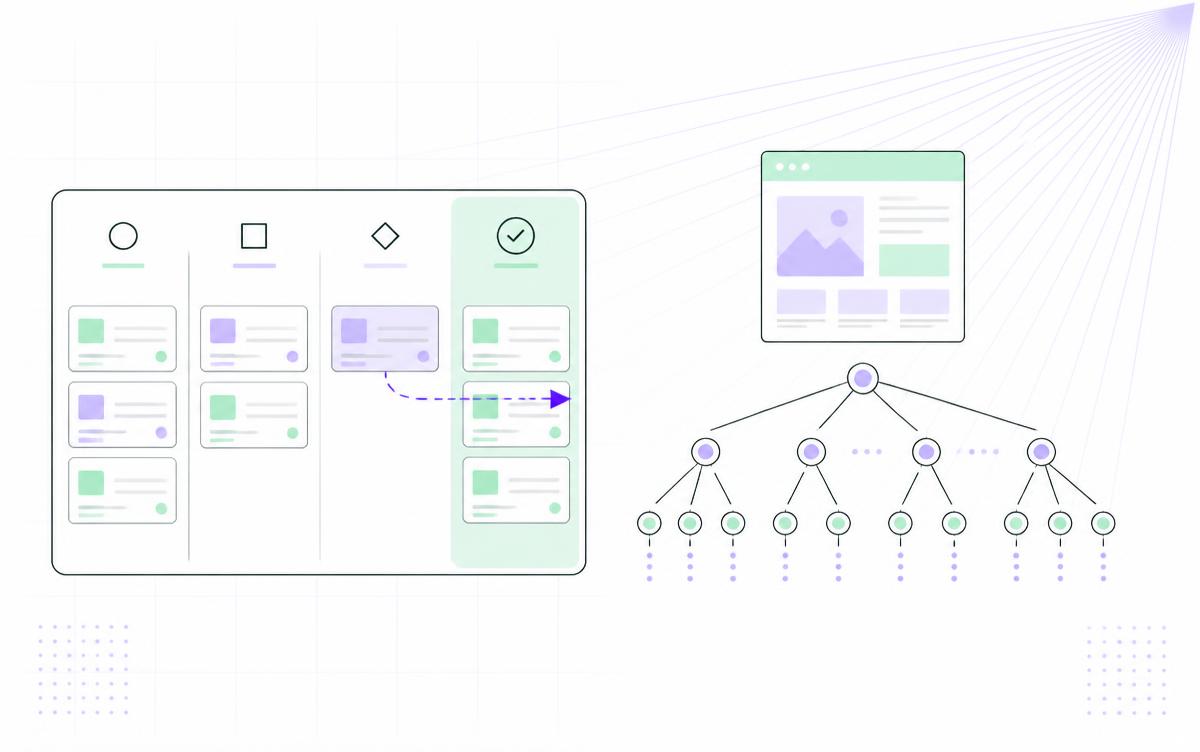
Your audit was finished in March. It's a very good audit. It's also still a PDF. That's the real problem an enterprise SEO agency should be solving — not strategy. If you run a site with fifty thousand URLs, your in-house team already knows the canonical tags are a mess and two category templates are eating each other's rankings. The bottleneck is the backlog, where those fixes have sat since March behind fourteen CRO experiments and a rebrand.
That's the gap we fill. discoweb is the delivery muscle: sprint-ready tickets your developers don't bounce, business cases your product owners can defend in prioritisation, and template-level changes that fix thousands of pages in a single release. Less admiring the problem. More shipped code.
What does an enterprise SEO agency actually do?
At enterprise scale — big retail, finance, travel, marketplaces, publishers — you stop optimising pages and start wrangling systems. Thousands of URLs are generated by a handful of templates. One bad rule in the faceted navigation can spawn a million crawlable junk pages overnight. And every change, however small, has to clear dev, brand, legal and release sign-off before it touches production.
So a good enterprise SEO agency splits the job in two. Half is the SEO you'd expect: technical work across templates, content at scale, links and digital PR. The other half is the bit most agencies quietly skip — turning recommendations into work your organisation will actually schedule. Prioritised roadmaps. Forecast business cases. Tickets written to your engineering team's definition of ready. If you lead SEO in-house, we're the extra pair of hands and the external voice that finally gets your backlog taken seriously.
Why enterprise SEO is a shipping problem, not a strategy problem
You've seen this film. An audit gets commissioned — thorough, technically correct, beautifully formatted — then presented, nodded at, and uploaded to a shared drive to die. Not because anyone disagreed with it, but because nobody translated it into work a product owner could weigh against the rest of the roadmap.
An audit nobody ships is a very expensive PDF.
We still run SEO audits — you can't prioritise what you haven't measured — but we treat the audit as the input, not the deliverable. Every finding leaves the document and enters your workflow as a scoped, estimated, justified piece of work. The metric we care about isn't recommendations made. It's recommendations live in production.
How do you get SEO fixes through an enterprise dev queue?
The same way anything else does: by looking like real work instead of a wishlist. Four things make the difference.
- 01**Tickets written to definition-of-ready.** User story, acceptance criteria, affected templates, before-and-after examples — enough that a developer can pick it up cold. No "improve site speed" tickets. Ever.
- 02**A business case attached.** Forecast impact, effort estimate, the cost of doing nothing — so when your fix meets a checkout tweak in sprint planning, it has numbers in the fight.
- 03**Batching by template.** Ten fixes to one template beat one fix to ten. We group work so each release moves the most URLs.
- 04**QA and release support.** We check staging, validate post-deploy, and stick around when something breaks — at enterprise scale, something occasionally breaks.
Templated pages: fix the template, fix ten thousand URLs
This is the maths that makes enterprise SEO worth doing. On a small site, a fix improves a page. On yours, a fix to the category template improves every category page at once — title logic, internal linking modules, structured data, pagination, faceted navigation rules. One pull request, ten thousand URLs. That leverage is why our technical effort goes into the template and rules layer, not polishing pages one at a time.
The flipside: template-level mistakes multiply too, and nowhere is that more brutal than a replatform, where one wrong redirect rule can vaporise years of equity in an afternoon. If a migration is on your horizon, our website migration SEO service exists for exactly that event — far cheaper before launch than after.
What does working with an enterprise SEO agency look like?
Not a monthly PDF and a Zoom call. We embed with your team: shared roadmap, prioritised backlog, and regular time with the people who actually ship — product owners and engineering leads, not just marketing.
- **Roadmap and prioritisation** — a living backlog ranked by forecast impact and effort, re-scored as things ship.
- **Delivery support** — tickets, business cases, QA, release checks, every sprint.
- **SEO reporting built for stakeholders** — your board wants a straight answer on organic, not a deck of vanity metrics.
- **AI visibility tracking** — AI search tools are already summarising your brand, accurately or not. We track how you show up and work on fixing it.
And because delivery lives inside your workflow, you keep the capability when the engagement ends. We want your organisation better at shipping SEO, not dependent on us for it.
How much does enterprise SEO cost?
Most agencies dodge this question, which helps nobody. The honest version: enterprise SEO is priced as a monthly retainer, and the UK market varies widely — because the scope varies widely. What moves the number:
- **Scale and complexity** — a two-million-URL marketplace with faceted navigation is a different animal to a five-thousand-page corporate site.
- **Markets and languages** — every extra locale multiplies templates, hreflang risk and stakeholders.
- **How much delivery you need** — advisory-only costs less than an agency writing tickets, business cases and QA checks every sprint.
- **Content and PR scope** — template fixes are one budget line; ongoing content and digital PR are another.
We scope after we've seen your estate and your release process — pricing enterprise work before seeing the dev queue is guesswork. You'll get a real number early, in writing, before procurement has to chase.
How to choose an enterprise SEO agency (and when we're the wrong fit)
Every shortlist looks the same on paper. Ask these four questions and it won't.
- Show me a real ticket you've written for another client. Redacted is fine. "We don't write tickets" is your answer.
- How do you build the business case when an SEO fix competes with revenue work in sprint planning?
- What happens when engineering says no?
- How do you know whether your recommendations from the last engagement actually shipped?
The honesty bit: we're the wrong fit for some buyers. If your site is a few hundred pages, you don't have a dev queue problem, and enterprise process would just be expensive ceremony. If you want an agency that never bothers your engineers, that's not us either — the entire point is bothering them productively. But if you're enterprise-scale and B2B, our B2B SEO services sit naturally alongside this work.
Got an audit gathering dust and a backlog that won't move? That's the exact problem this service was built for.
Talk to us about shipping itQuestions we get asked
What makes an enterprise SEO agency different from a regular SEO agency?
Scale changes the job. Enterprise sites run on templates that generate thousands of URLs, so fixes happen at the template and rules level, not page by page. The bigger difference is organisational: every change clears dev, brand, legal and release sign-off, so an enterprise SEO agency needs delivery skills — tickets, business cases, prioritisation — that standard agencies never build.
Do you replace our in-house SEO team?
No — we're usually hired by them. In-house SEO leads mostly know what needs fixing. What we add is capacity they don't have and leverage they can't generate internally — a named outsider whose recommendation is harder for a steering group to shrug off. No in-house team at all? We carry more of the load, but partnership is the default.
How long does enterprise SEO take to show results?
It depends on your release cadence more than on us. Template-level fixes can start moving rankings within weeks of deployment, because one change touches thousands of URLs — but if changes take three months to clear your dev queue, that's your real timeline. Budget a couple of release cycles before you judge the programme.
How much does an enterprise SEO agency cost in the UK?
Expect a monthly retainer, and expect the figure to vary widely across the UK market. The main drivers are site scale and complexity, number of markets and languages, and how much hands-on delivery you need versus advisory. Once we've seen your estate and release process, you get a firm figure in writing.
Can you work inside our existing tools and dev workflow?
Yes, and we'd insist on it. Tickets go into your Jira, Azure DevOps or whatever your engineering team runs, written to your definition of ready. We join sprint ceremonies where useful and fit your release calendar. Making developers leave their workflow to read a PDF is how SEO recommendations die — we work where your team works.
See what search and AI are saying about you
A 30-minute call, a straight answer, and the three things we would fix first.