Discover
We check how your business appears across a set of relevant buyer questions. We look at who else appears, too.
Your next customer could be asking ChatGPT who to work with. We help your business get found in AI search, with clearer content, stronger evidence and a website search tools can understand.
AI search helps people research a problem, compare options and find businesses that could help.
Instead of only showing links, tools such as ChatGPT and Google AI Overviews can put information into an answer. That answer may mention businesses and link to sources.
We find the gaps, improve the information and check what changes.
We check how your business appears across a set of relevant buyer questions. We look at who else appears, too.
We identify the pages, questions and technical issues worth tackling first. You get a clear plan linked to what you sell.
We improve your website's content and technical foundations. Clear service pages, useful answers and evidence from your real work.
We repeat the checks and track the visits and enquiries we can identify. You see what changed and what needs work next.
Nobody can guarantee an AI recommendation. We focus on the work we can control.
We track visibility alongside the visits and enquiries we can connect to AI search.
How often your business is mentioned or your website is linked across the buyer questions we test. We compare this over time.
Visits with an identifiable AI search source, such as ChatGPT or Perplexity. We check what those visitors do next.
The forms, calls and sales opportunities we can connect to those visits, where your tracking allows it.
AI answers vary, and not every visit has a clear source. Our checks are a sample, not a count of every answer. We'll be clear about what the numbers can and can't tell you.
A closer look at the problems we've helped businesses solve. These studies cover our wider search and lead generation work, not AI search alone.
 Case study
Dangerous goods haulage
#1
for “ADR transport”, “ADR shipping” and “ADR courier”
Full website build, service and location page copy, on- and off-page SEO. 26 keywords in Google's top 100.
New enquiries within 4–6 weeks of launch
Read the case study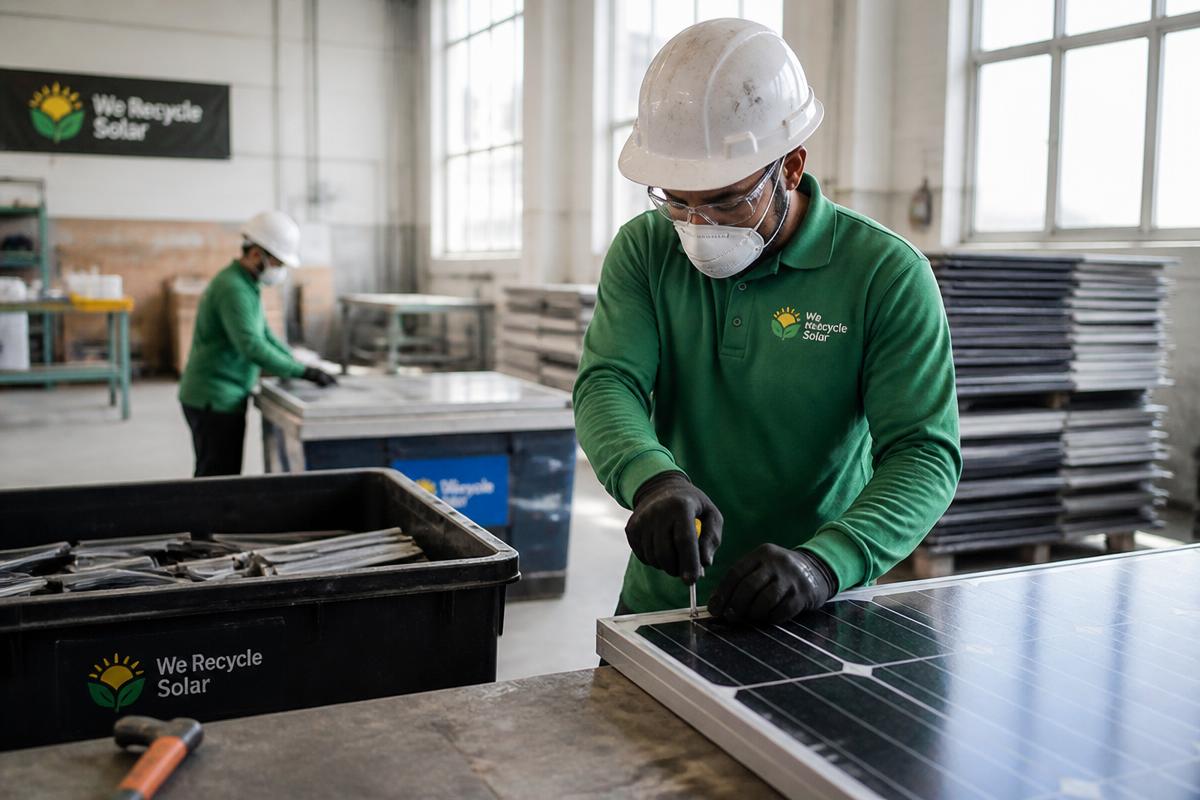 Case study
Solar, battery & inverter recycling
9 → 101
keywords in Google's top 100 (Aug 2024 → Jul 2026)
Seven #1 rankings plus AI snippets for solar panel recycling, PV recycling and recycle solar panels.
Hundreds of leads in 12 months, several large clients won
Read the case study Case study
South West England
250+
keywords ranked at peak, 139 currently
Six location pages, 12+ sector pages and an ongoing blog programme built around buyer questions.
100+ inbound leads and several contracted clients in 12 months
Read the case studyAn AI search agency helps improve how your business is found and represented in AI-generated answers. At discoweb, that means reviewing your visibility, improving your website and content, and measuring changes against relevant buyer questions.
SEO helps people find your website through search engines. AI search also considers whether your business is mentioned or your content is used in generated answers. The work overlaps: clear information, useful content and a technically sound website matter to both. Our B2B SEO services cover that shared foundation.
Not necessarily. Ask your current agency how they check AI visibility and what work they recommend. If there's a gap, we can discuss how to address it without duplicating work.
We can work to improve your chances of being found and accurately represented. We can't control ChatGPT's answers or promise a recommendation. Be wary of anyone who does.
We track mentions and website links across an agreed set of questions. We also monitor identifiable AI referral visits and the enquiries connected to them. These measures give us useful evidence, but they don't capture every AI-influenced sale.
There's no fixed timeline. It depends on your website, your market and the work needed. We establish a starting point, agree priorities and review progress over time. Anyone promising instant results is overpromising.
The cost depends on the scope. A visibility review is a different job from ongoing content and technical work. We'll agree what needs doing and what it costs before work starts.
It can be, particularly when buyers research complex services or compare suppliers. We start with the questions your customers might ask and assess the opportunity. It should earn its place in your marketing budget.
Tell us what you sell and who you want to reach. We'll talk through where AI search could fit.