


The B2B PPC Agency That Tells You When Not to Run Ads
Generic B2B keywords are some of the most expensive clicks in UK search. A good B2B PPC agency decides which of them are worth it — and tells you when none of them are.
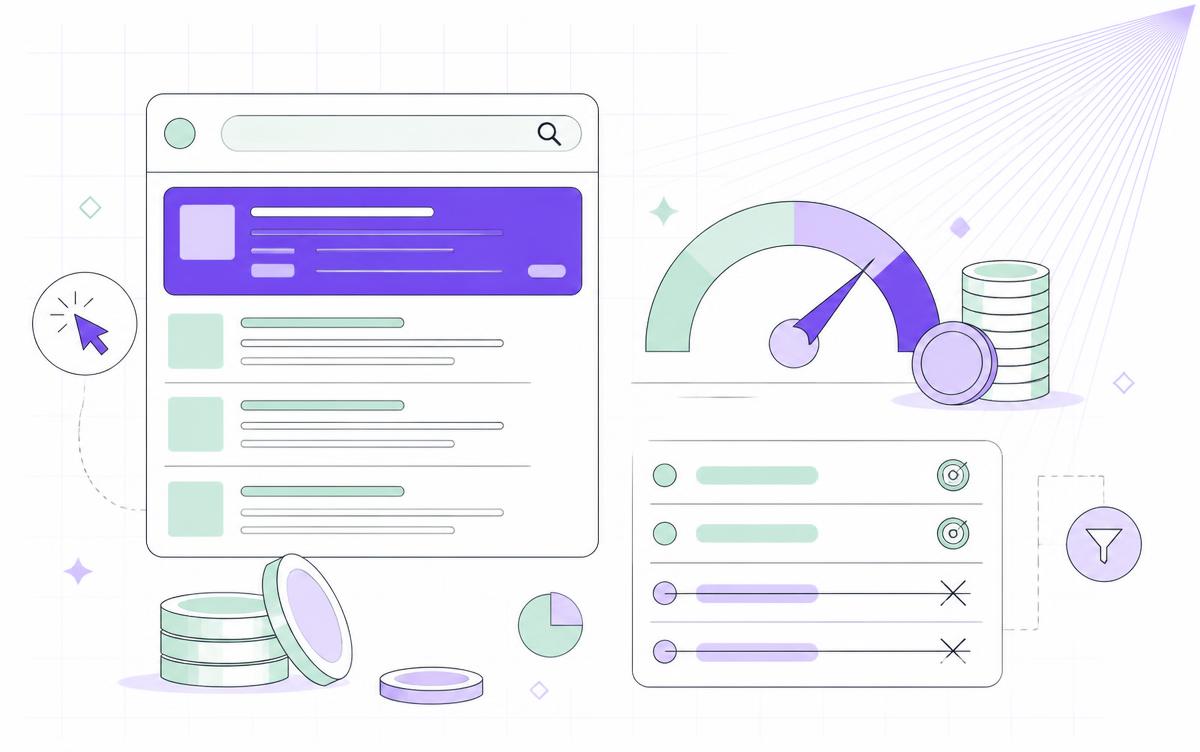
A click is not a lead. It's the chance of one — and in UK B2B search, generic keywords sell that chance at some of the highest prices in the auction. Google will spend whatever budget you give it, cheerfully, by Friday. So before a B2B PPC agency runs anything, it owes you an answer to a harder question: are those clicks worth buying at all?
Sometimes they are, and then we run paid tightly — few keywords, high intent, judged on pipeline. Sometimes the honest answer is 'skip the auction, build the asset', and we'll say so before taking a penny. Either way, we run search as one discipline: paid and organic sharing a single pool of keyword intelligence.
What are you actually paying a B2B PPC agency for?
The deliverables look ordinary: paid search on Google and Bing, LinkedIn Ads, retargeting, landing pages, reporting. The real value sits underneath — capital allocation. Every keyword is a purchase decision, B2B clicks come dear, and someone has to decide which searches deserve your money before the platforms spend it for you.
- Keyword economics first: modelling cost per click against your close rate and deal value before a single campaign gets built
- Intent filtering: bidding on comparison and pricing searches rather than head terms typed by students, job-hunters and competitors
- Pipeline measurement: campaigns judged on revenue in your CRM rather than marketing-qualified leads in a spreadsheet
That last one matters most. An agency paid a percentage of your spend has no incentive to shrink your spend. Judge a B2B PPC agency by how often it tells you to spend less.
Why B2B PPC is nothing like B2C (and why most agencies run it like it is)
B2C paid runs on tight feedback loops: one buyer, short cycle, purchase within days of the click. The ad platforms were built for that world, and so were most agencies. B2B breaks every assumption — a buying committee instead of one buyer, a sales cycle measured in months, and the person who clicked your ad in January signing a contract in July. If at all.
Google's smart bidding needs conversion volume to learn, and B2B accounts rarely have it. So generalist agencies feed the algorithm soft conversions — whitepaper downloads, webinar sign-ups — and it dutifully finds more people who like free PDFs. The dashboard glows, the sales team quietly stops opening the leads spreadsheet, and if your agency can't say which campaigns produced actual pipeline, that silence tells you where the budget went.
When PPC is the wrong answer
Sometimes the right amount of PPC is none. Part of the job at a B2B PPC agency is knowing which battles justify premium click prices — and which aren't worth fighting at all.
- Your addressable market is tiny. A few hundred target accounts can't generate enough search volume to feed campaigns — that's a job for outbound and organic.
- Only generic head terms exist for what you sell. Broad terms carry mixed intent at premium prices, so you end up paying full whack for researchers and job-hunters.
- Your sale is education-led. If buyers need months of nurturing before they'll talk to sales, content compounds while clicks just expire.
- The maths fails. If cost per click times clicks-per-deal exceeds what a customer is worth, no amount of optimisation rescues it.
Insurance is the extreme case: broker keywords are among the priciest in UK search, which is exactly why we built SEO for insurance brokers to skip the auction altogether. When the maths fails, the budget usually belongs in B2B SEO instead — the same commercial keywords, paid for once with effort rather than again with every search.
How paid and organic share one pot of keyword intelligence
Split paid and organic across two agencies and both go blind. Run together, each makes the other cheaper. If you already rank first for a term — or an AI answer cites you — buying that click again is a donation to Google. And with AI search eating clicks on informational queries, knowing where you're actually visible now decides where paid money still earns its keep.
The flow runs the other way too. Paid search-term reports are the rawest buyer language you can get — the exact phrases prospects type, which ones convert, which ones look tempting and produce nothing. That feeds the content strategy directly, so organic builds pages for terms with proven commercial intent instead of guessed ones. One keyword system, one blended report showing what a customer costs across both channels.
Organic tells paid where not to spend. Paid tells organic what buyers actually type. Separate them and you pay twice for the same lesson.
How we run B2B PPC campaigns
When the maths says yes, this is how a B2B PPC agency should run it — narrow, boring and profitable rather than broad, exciting and expensive.
- Bottom-of-funnel first. Comparison, alternative and pricing searches — the queries typed by people with budget and a shortlist — before a penny goes anywhere else.
- Negative keywords as a weekly ritual. Search-term reports get pruned constantly; every irrelevant click blocked is pure margin.
- LinkedIn for the rest of the committee. Firmographic targeting — industry, company size, job title — reaches the people who never search but still get a vote.
- Landing pages that match the query. Someone searching a comparison term lands on a comparison page.
- Bids capped by your deal economics. Google's recommendations optimise Google's revenue.
- CRM-connected measurement, so campaigns are judged on pipeline and closed revenue over your real sales cycle.
What does B2B PPC management cost in the UK?
A UK B2B PPC agency charges one of two ways: a flat monthly retainer or a percentage of your ad spend. Your ad budget sits on top of either — and it's usually the bigger number.
Percentage-of-spend deserves scrutiny. It pays the agency more as your budget grows, which is the wrong incentive in B2B, where the winning move is often spending less on fewer, better keywords. Flat fees aren't automatically virtuous either — but at least they don't reward bloat.
The fee is the smaller question anyway. The bigger one is whether the click-to-deal maths works, and that rests on your numbers: cost per click, close rate, average deal size. Bring those and we'll do the sum with you before we quote. Cheaper to hear 'no' in week one than in month twelve.
Send us your target keywords and your average deal size. We'll do the click-to-deal maths and give you a straight answer — even if that answer is 'don't run ads yet'.
Get the honest mathsQuestions we get asked
Is PPC worth it for B2B companies?
Only if the maths works. Multiply your realistic cost per click by the clicks you need per lead, then by the leads you need per deal — if that cost per deal fits comfortably inside your margin, paid can work brilliantly. If your keywords are expensive and your deals are modest, or your addressable market is a few hundred accounts, the money usually works harder in organic.
How much does a B2B PPC agency cost in the UK?
A B2B PPC agency charges either a flat monthly retainer, scaled to your spend and channels, or a percentage of your ad spend. Be wary of the percentage model — it rewards the agency for growing your spend rather than your pipeline. Whatever the fee, remember it's the smaller line — the ad budget itself is where most of the money goes.
How long does B2B PPC take to show results?
Traffic arrives on day one; judgement takes a sales cycle. The first few months go on search-term data — pruning waste and stabilising costs — while pipeline impact is measured over your actual cycle length, often six months or more in B2B. The early signal worth watching is lead quality: whether sales accepts the leads and opportunities appear in your CRM.
Should we do SEO or PPC first?
Whichever the keyword economics favour — it's rarely a coin flip. If your commercial terms are expensive to buy, organic usually wins long-term and paid should only cover the gaps while rankings build. If you need pipeline this quarter and the maths supports it, paid goes first. The genuinely wrong answer is running them separately through two agencies that never share data.
Why are the leads from our B2B PPC campaigns so bad?
Almost always because the account is optimised for conversions the platforms can see — form-fills and downloads from anyone — rather than pipeline. Smart bidding needs volume, so agencies feed it soft conversions, and the algorithm hunts for more of whoever converted last week, buyers or not. The fix: bid on high-intent terms only, prune search terms aggressively, and connect your CRM so campaigns are judged on revenue.
See what search and AI are saying about you
A 30-minute call, a straight answer, and the three things we would fix first.